
Timex Computer Corporation
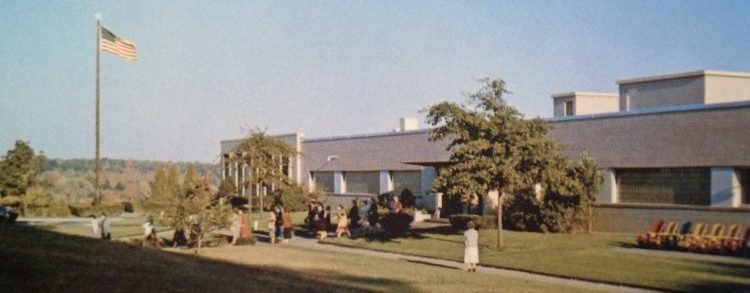
While the Timex Corporation is best known for its watches, it made many other products. In 1982 its own press release listed “gyroscopes and fuses for defense and aerospace industries, computer components for major manufacturers and the recently-introduced Nimslo three-dimensional 35mm camera,” and added that “Timex formerly manufactured Land cameras for Polaroid Corporation” (press release).
Accounts of the company’s age differ. InfoWorld quoted Timex calling the computer a “milestone in the 125-year history of the Timex Corporation” (May 10, 1982), while the New York Times wrote that the company “was founded in the 1940’s by T. Frederick Olsen, a Norwegian who owns a majority of the company’s stock” (February 23, 1984).
Blocked from the jewelry stores that traditionally sold watches, Timex sold through “drugstores, hardware stores, and large mass merchants,” and built up “more than fifteen manufacturing and assembly plants” around the world (David Shanks, 1985).
Contract Manufacturing
Those plants made Timex a contract manufacturer for other companies. Clients included the Polaroid Corporation, for whom Timex built Land cameras, makers of computer components, and the Nimslo three-dimensional 35mm camera. Syntax’s profile of Dan Ross listed “Gyroscopes, Polaroid cameras, and computer assemblies” among Timex’s products (November 1982).
Agreement with Sinclair
“Timex began manufacturing the ZX-81 for Sinclair in January 1981 in its Dundee, Scotland plant. In 12 months Timex assembled over 500,000 computers” (Dan Ross – Timex). By late 1982 Timex was producing “one computer every ten seconds.”
Sinclair announced in February 1982 that Timex would market its computers in the United States. “Sinclair will phase out its mail order computer business when Timex reaches agreed-upon production levels,” Mary Reinman, a public relations counsel, told InfoWorld (March 15, 1982). The levels were never published; a later InfoWorld report said only that Timex had to reach “sales quotas–which were not specified.”
The contract covered “current and future Sinclair personal computer products, and Timex’s own development of Sinclair computer technology” (ZX Computing, Summer 1982), and it was “limited to North America and Central American countries, including the Caribbean” (InfoWorld). Timex was to pay Sinclair “five percent royalties on all hardware sales, five percent on Sinclair-originated software and two-and-a-half percent on Timex-originated software” (Sinclair User, June 1982).
The Timex Computer Corporation, described in the launch press release as “an affiliate of Timex Corporation,” was formed to manufacture and market the computers. It was headquartered in Middlebury, Connecticut, and had research and development facilities in Middlebury, Cupertino, California, and France. Its mail went to Waterbury, Connecticut.
Timex/Sinclair 1000
Timex announced that it would manufacture and market the Timex Sinclair 1000 in New York on April 20, 1982. Timex called it “the first personal computer to break the $100 price barrier.” The announcement was made by Daniel D. Ross, vice president of Timex Computer Corporation (SYNC, May/June 1982), at a press luncheon at the Tavern on the Green in Central Park (Stan Veit, 1984).
Timex planned to sell the computer through “more than 100,000 retail outlets.” Its “first computer product was introduced in the U.S. on July 29.” By 1983 David Ahl counted “about 14,000 retail outlets” carrying it (SYNC, May/June 1983). Manufacturing of the TS1000 “expanded to plants in Scotland, Portugal, and France.”
J. Walter Thompson handled the advertising. The tag line was “The Power is Within Your Reach,” and in the third week “more than 52,000 call attempts were metered for the toll-free phone number in the ads. This tied up all 800 lines into Connecticut.”
Sales were fast. Timex “sold 550,000 units in its first five months” (Computers & Electronics, December 1983); “Between August and December last year, Timex sold 600,000 machines” (Popular Computing Weekly, March 1983). Within five months Timex had 28 percent of the US home computer market, according to T-S Horizons (January/February 1984); Timex Sinclair User put it at “more than 30 per cent” (June 1983).
Sinclair, by comparison, “had sold 500,000 ZX81s before turning distribution over to Timex” (Computers & Electronics). That figure was not limited to the US. SYNC estimated that “only 200,000” of the ZX81s were in the United States.
By mid-1983 Timex had “over 70 titles that are available with our label on it,” Ross said. It also signed a printer deal with Alphacom “estimated to be worth $54 million” (InfoWorld, July 11, 1983).
Timex Computer Club
“Each person who returns the warranty card” became a member of the Timex Computer Club. The club was run by Margot Murphy at P.O. Box 2655, Waterbury, CT 06725 (Syntax, April 1983). Its newsletter, Ramblings, went bi-monthly with the June/July/August 1983 issue (New Bi-Monthly Format).
Timex/Sinclair 2068
The TS 2068 reached stores in late 1983 at a suggested retail price of $199.95 (November 1983). It entered a crowded marketplace. Synchro-Sette later wrote that retailers had “lost interest in selling Timex computers” after the TS1000 went through mass marketers “who discounted the product sharply and declined to sell the 1500 and 2068” (Gene Buza, February 1984).
At the Boston Computer Society’s Timex Sinclair Celebration on October 22, 1983, Timex and Sinclair announced a US version of the Microdrive “for all three machines by January or February 1984,” the modem for around the first of the year and an 80-column printer for the 2068. “Timex will put out an EPROM to plug into the 2068 loading dock to convert the 2068 into a Spectrum,” and Dan Ross showed software that was on the way (Jules Gesang, CATS, November 1983).
Of the planned peripherals, the TS2050 modem was the most visible casualty. “Orders were taken, but the initial 8,000 units never budged from their Connecticut warehouse” (Tim Woods, Time Designs, Nov-Dec 1984).
Timex still courted the user groups that winter. Eastern regional manager Jack Ewald visited the Washington-area CATS club in December 1983 to talk about Timex’s plans for 1984 and the TS2050 modem, which listed at $119.95, and “It was anounced that there would be more contact between TIMEX and the USER GROUPS” (Things to Come, CATS, January 1984).
Changes at the Top
In January 1984 InfoWorld reported that Dan Ross would resign effective March 1984 and that “His position will be taken by Mike Jacobi” (T-S Horizons). Jack Hodgson’s Timex source said that “The Timex Computer Corp. is no longer,” its functions absorbed into the parent company. With Ross gone, the hierarchy was “Timex VP Kirk Pond in charge with three more-or-less equal Lieutenants: Doug Smith, Bill Skyrme, and Dick Longe” (10 REM, January 1984).
Timex was also selling assets. It sold its gyroscope business to Bendix for $15 million, and in January 1984 it sold its Middlebury headquarters building and leased part of it back (T-S Horizons, March 1984).
Timex Exits Home Computer Market
Timex announced its exit from the US home computer market in a press release “dated February 21, 1984” (Stan Veit). Newspapers reported it the next day. C. M. Jacobi, vice president of marketing and sales, said: “We believe instability in the market will cause the value of inventories to decline, making it difficult to make a reasonable profit” (New York Times, February 22, 1984).
The exit came during the video game crash of 1983. The Times called Timex “the third company to be driven out of the business by a price war that led to industry losses of more than $1 billion last year.” Texas Instruments had dropped out in October, and Mattel announced on February 3 that it was selling its video game and home computer business.
The price war had driven the TS1000 far below its $99.95 launch price. Some retailers sold it “for as little as $15 at Christmas” (New York Times), and Synchro-Sette reported “$24.95 was a liquidation price at a couple of stores in our area” (January 1984).
According to Business Week, “In 1983, Timex lost 100 million dollars, with revenues of $400 million” and sold 1.2 million computers that year, mostly TS1000s (T-S Horizons). Timex said the reports of its losses “materially misstated” its financial condition. The Times estimated that it had sold “more than one million units” in all.
After the Exit
Susan Mahoney wrote that 24 people were let go. Timex said it would “continue to honor the warranties on their existing equipment” and sell off its inventory (The Demise of Timex Computer Corporation, March 1984). “Timex sold all hardware, most of software to a liquidator in New York” (T/S Update, August 1984).
A March 1984 report estimated that 45–50,000 TS2068s had been sold, that 10–15,000 were in Timex’s warehouses and that “90,000 were still at the factory in Korea” (March Highlights, April 1984).
The Timex Service Center at 7004 Murray St., Little Rock, Arkansas (Syntax, November 1982) stayed open. From there the Timex Materials Sales Division sold the TS2068 Technical Reference Manual for $25 (Syntax, May 1984). A letter from Doug Smith, manager of product planning, offered a large TS2068 schematic for $2.50 from the “Technical Materials Sales Division” and said: “No information is available for products which have not yet been shipped, including the Modem, System Interface Unit, 80-Column Printer, or Microdrives” (Timex Technical Manual, CATS, July 1984). Timex “originally produced 200 copies of the approximately 300-page manual on a Xerox machine” (News From Timex, August 1984).
In March/April 1987 Little Rock still provided “out-of-warranty” service (Time Designs). By September 1987 it “will no longer accept Timex Computer product for repair” (Note From The Editor).
Looking back in 1988, Sinclair’s Nigel Searle said of the price war: “everyone was guranteed to lose money no matter how intelligently they handled themselves. So Timex took the brunt of that” (Time Designs, September/October 1988).
Timex Portugal
Timex’s manufacturing facility in Portugal continued to refine and develop new products after Timex exited the US home computer market. It produced the Timex Computer 2068 and 2048, as well as disk drive systems and other products. SUM described the Portuguese division as “independent of the American division” (April 1985).
In 1985 Antonio Gomez, Managing Director of Timex Portugal, planned to bring the 2068 and its disk system to the United States, with Timex Portugal using the Timex headquarters in Waterbury as a temporary base for FCC paperwork (Time Designs, May/June 1985). In 1986 Timex Portugal shipped “an initial load of 10,000 units” to Mexico (June 1986). In July 1986 Sinclair User reported an agreement “to supply 800,000 Timex 2068 machines and 200,000 FDD 3000 twin 3 inch floppy disc drives to the Polish government” (Mystery clouds Amstrad deal); Sinc-Link repeated it with 300,000 drives (May/June 1986).
Key Employees
George Grimm recalled that the corporation started with six people (George Grimm on Timex, a 2025 account):
- Bob Behler, engineering
- Carlos Dragovich, production; “Timex manufacturing chief” in 1983 (July 1983)
- George Grimm, software manager
- Margot Murphy, marketing services manager; ran the Timex Computer Club
- Dan Ross, vice president; called “Chief Operating Officer of Timex Computer Corporation” in 1983 (June 1983). He had worked at IBM, Itel and Memorex and came to Timex in March 1982
- Billy Skyrme, product manager in 1982; “director of product planning for Timex Computer” in 1984 (January 1984)
After Ross left, Timex vice president Kirk Pond was in charge of the computer business, with Doug Smith, Bill Skyrme and Dick Longe as his “Lieutenants.”
Eventually, others joined Timex as it needed more expertise to launch the 2068. Many of the engineering titles below come from a May 2, 1983 Computer Engineering Organization memo. They included:
Executives
- Lem Tarshis, executive vice president at Timex
- Kirk Pond, executive vice-president
- C. Michael (Mike) Jacobi, vice president of marketing and sales; announced the exit and replaced Dan Ross
- Rex Naden, vice-president of research and development (interview)
- Ed Tyranski
Design
- John Houlihan, design manager
- Gary Grimes, design manager, computer products
Engineering
- Lou Galie, director, computer engineering
- Tom Belpasso, IC engineer, project engineering manager
- Al Biderman, project manager, hardware development (external sourcing)
- Michael Branigin, manager, computer hardware engineering (TS1000, TS2000, TS1500); co-author of the TS2068 Technical Reference Manual
- Daniel Chen, senior project engineer (external sourcing)
Computer Systems Architecture
- Victor Schiff, manager, computer systems architecture (systems engineering, Sinclair liaison)
System Software
- Scott McCourt, manager of systems software
- Dave Boyle, software engineer
- Lon Hildreth, software engineer
- Will Collum, software engineer
- V. Carole Corcoran, wrote the TS2000 bug fixes memo to Scott McCourt; co-author of the TS2068 Technical Reference Manual
Boyle, Hildreth and Collum are credited on the TS 2000 System Software Design Specification.
Test and Operations
- Bruce Honnold, manager of test and operations (software test)
Other employees
- Sam Barron, district sales manager for northern California
- Lorraine Dargan
- Ken Diederich, Little Rock factory/repair center employee
- Charles Durang, writer
- Jack Ewald, eastern regional manager; visited the CATS club in December 1983 (Things to Come)
- Ken Hollandsworth, educational consultant
- Sue Mahoney, technical support manager at the Middlebury headquarters from November 1982 (How I started a user group). She was laid off in 1983 (CATS, October 1983) and went on to organize the Timex Sinclair Celebration at the Boston Park Plaza Hotel on October 22, 1983; Timex “wasn’t able to budget the show,” and Reston Publishing lent the money (Sue Mahoney, CATS, November 1983)
- Russell Meade, Timex area representative in the Pacific Northwest (Tacoma, then Portland)
- David Ornstein, author of the Bank Switching Controller Chip functional specification; earlier Technical Services Manager for Sinclair Research (U.S.)
- Paul Schirloff, editor of Ramblings
- Doug Smith, manager, product planning; also titled director of product/market planning in 1984
- Marty Warner-Dubay, software development department; “she received her pink slip the same day Timex got out of the business” (September 1984)
- Phil Wright, senior project engineer, vendor liaison (technical liaison to “Silicon Valley” sources)
Further Reading
- The Rise and Fall of the Timex Computer Corporation, Part 1: What Happened? (Tim Woods, Time Designs, 1984)
- Part 2: On the Drawing Board
- The Demise of Timex Computer Corporation (Susan Mahoney, 1984)
- Computers Dropped by Timex and Timex’s Marketing Cited for Poor Sales (New York Times, 1984)
- Dan Ross – Timex (1982)
- Interview with Rex Naden