
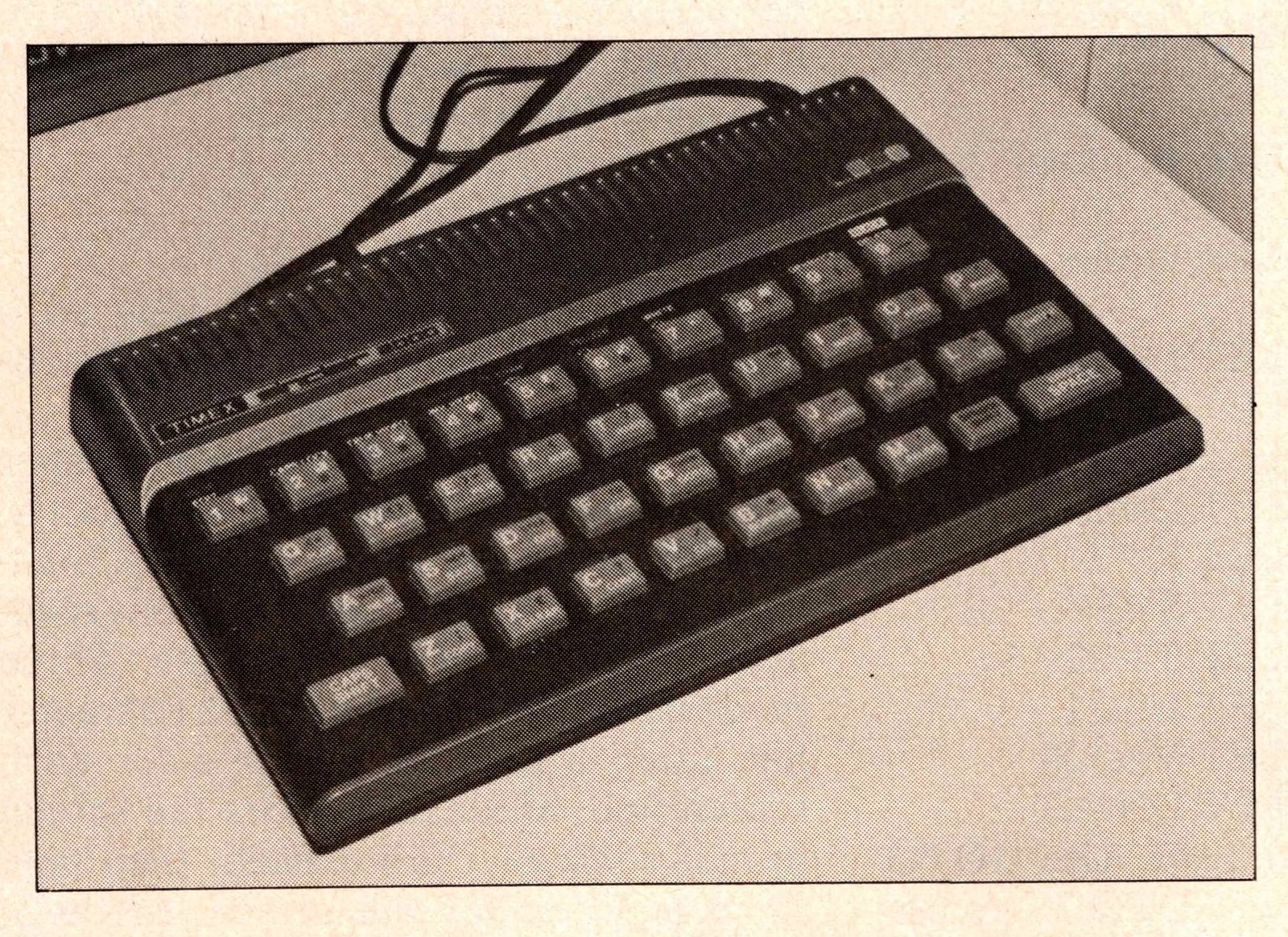
At the Winter Consumer Electronics Show in Las Vegas, there was much fanfare surrounding the official introduction of the Timex/Sinclair 2000. Dan Ross, Vice-President for Computer Products, and the entire Timex crew were there as well as Clive Sinclair and Nigel Searle from Sinclair Research in Britain. On a much lower key, a Sinclair clone and a look-alike that ran Forth were shown by smaller companies.
We’ve told you about the 2000 (Sinclair Spectrum) in previous issues of SYNC, so before looking at the other new hardware, let’s hear what Dan Ross has to say about marketing. Today, about 14,000 retail outlets are carrying the Timex/Sinclair 1000; Dan expects that number to increase to 25,000 or more by the end of 1983. Catalog showrooms, toy chains, and bookstores are all in Ross’s sight, but he also plans to target other channels of distribution, most notably schools and banks.
By June or July, says Ross, several programs will be instituted between Timex and different banks. He thinks that banks will be rushing to give away the 1000 as a premium for opening new accounts, especially when Timex introduces a $99 modem (expected in the first quarter of 1983).
Ross feels the modem is important because banks are very interested in developing at-home electronic banking services, but the terminal cost thus far has been prohibitive. A computer/modem combination with a list price of $185 could change all that.
Like Apple, Atari, and Tandy, Timex sees the educational market as having a vast, untapped potential. Our opinion is that Timex might be underestimating the amount of software, courseware, and handholding support that is necessary to get into the educational market in a major way. Time will tell.
How many Timex/Sinclair 1000 and Sinclair ZX81 computers have been sold? Of course, the number is a moving target, but as of the end of 1982, our best estimate is 600,000 Timex/Sinclair 1000s, and about the same number of ZX81s, although only 200,000 of them are in the United States.
Does that make the Sinclair the best selling computer in the world? We think so, and Clive Sinclair and Dan Ross certainly agree. However, both Commodore and Texas Instruments also claim to be number 1 in sales. Commodore people were telling everyone in sight at CES that they had produced one million Vic 20’s, while TI people were just saying the 99/4A was the best seller, period. No matter who you believe, 1983 should shape up to be a most interesting year.
This year will be interesting for many reasons. First, with Time magazine endorsing the personal computer as “Machine of the Year,” the home computer gained respectability and urgency in the minds of millions of consumers. Second, as more people enter the market as consumers, volume goes up and prices come down. But beyond the effect on prices, more customers mean that manufacturers will offer a wider diversity of peripherals, software, and applications.
In addition to the many new peripherals and software packages at CES of interest to Timex and Sinclair owners, two new computers were announced. The first was a clone of the Timex/Sinclair 1000 with the main difference being a “real” keyboard. Well, it doesn’t exactly have a typewriter keyboard, but rather little rubberized “Chiclets.” Dubbed the Futura 8300, it was being shown in the Unisonic booth.
I spoke with the Chinese designer of the Futura and asked him if the Basic was licensed from Sinclair. All of a sudden, his English seemed to falter, but he quickly recovered, shrugged and asked why it should be licensed. Why, indeed? I’m not sure, but it seems to me that it should be.
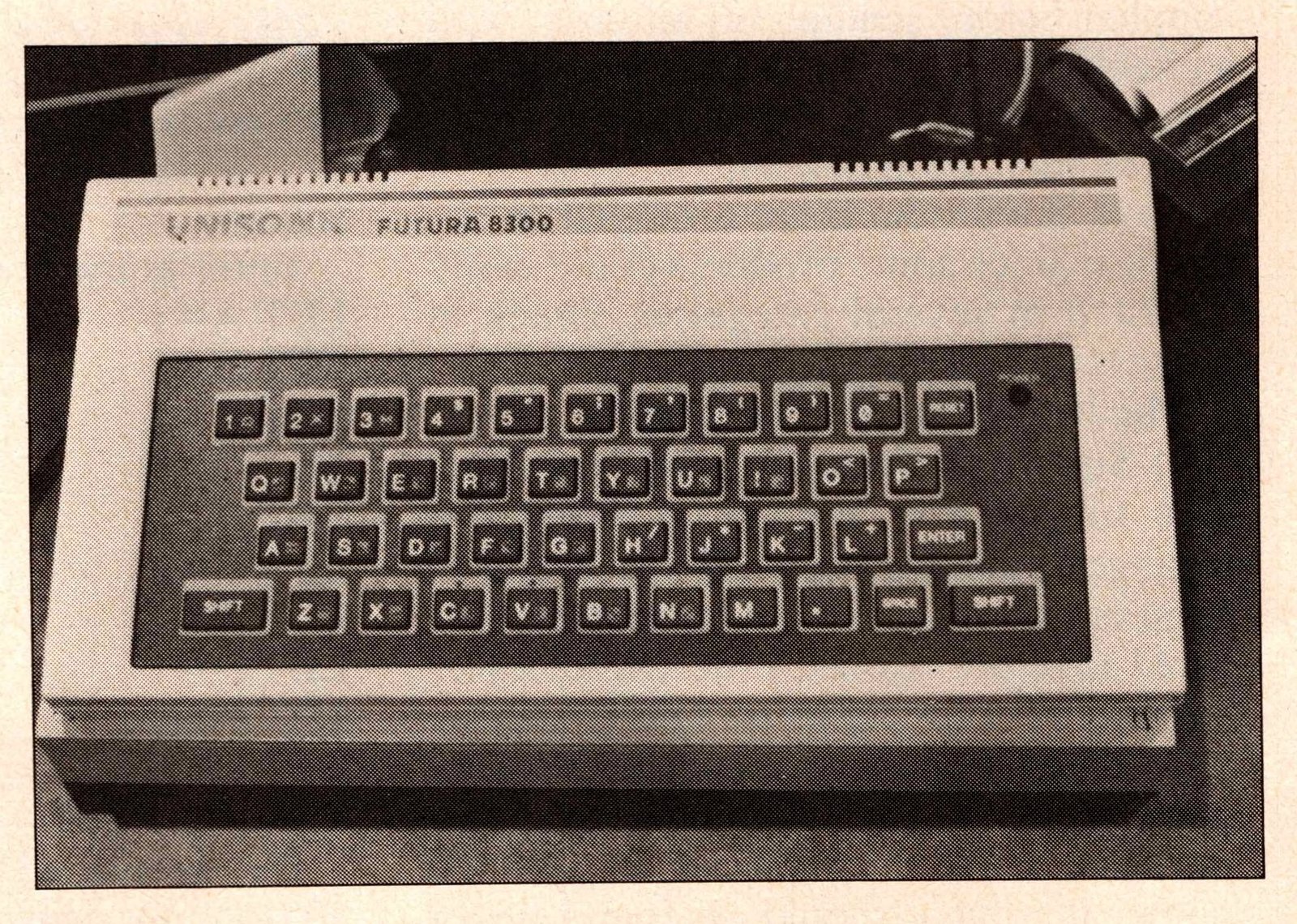
I then went to find someone from Unisonic who could tell me when the machine might be marketed, how we could get one for review, and so on. “We don’t have anyone to deal with the press,” I was gruffly told. “How should I go about getting one?” I asked, reminding the gentleman that we published SYNC and Creative Computing. “Buy one,” he said as he walked away to find someone else to insult. Although Unisonic is a strict orthodox Jewish company and presumably its employees have had a fine upbringing, we have been singularly unimpressed with their courtesy and product support in the past. Thus, we do not have high hopes for the Futura 8300, even at the suggested retail price of $80.
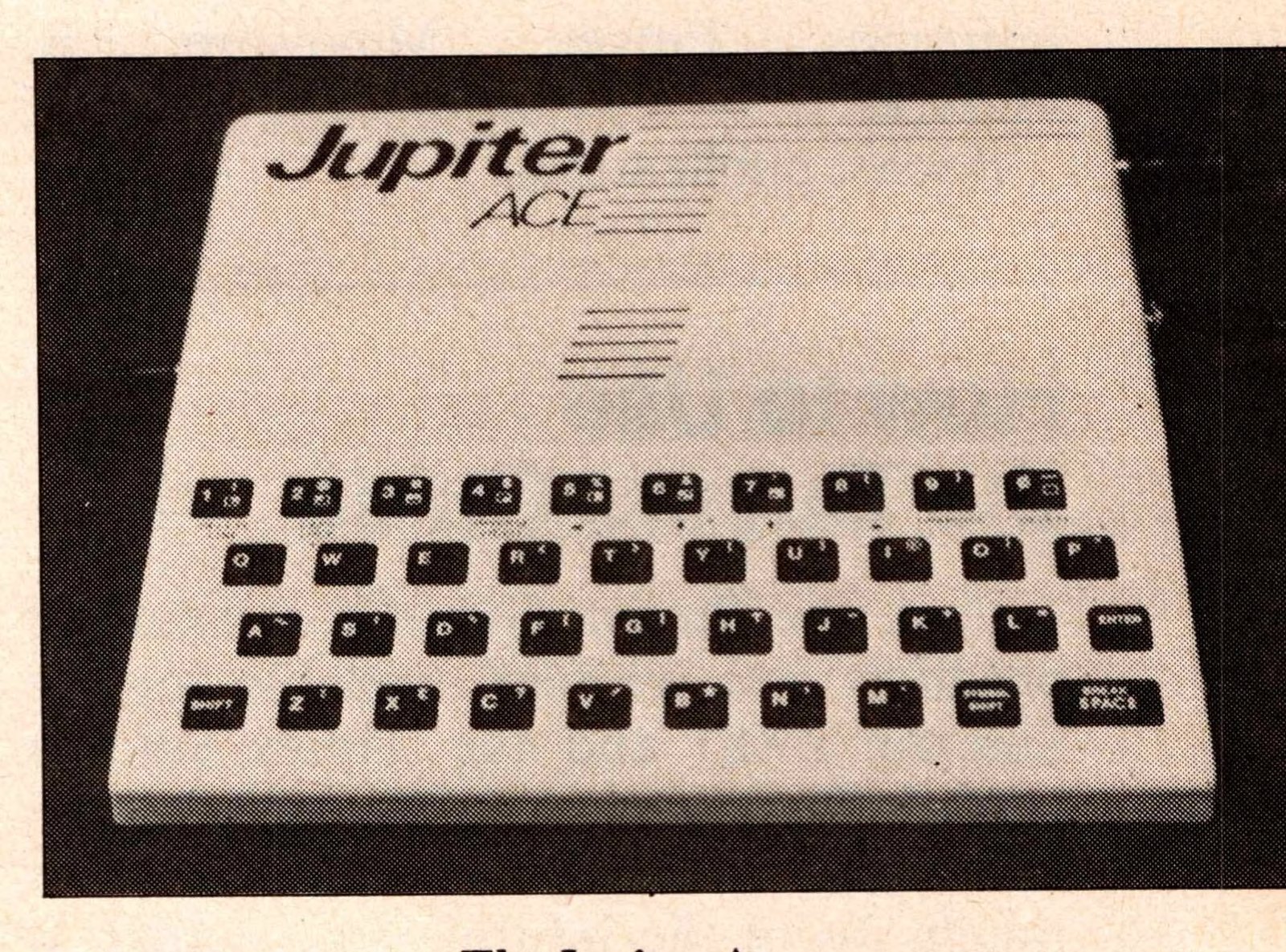
Another computer which also looked like a T/S1000 with a real keyboard was the Jupiter Ace. Unlike the T/S machine, the Jupiter Ace speaks Forth, a powerful language that adherents claim is ten times faster than Basic, four times as compact, and much more flexible.
The Jupiter Ace has a Z80A microprocessor, 3K RAM, a 40-key keyboard with auto repeat, graphics resolution of 64 x 46 pixels (which the designers claim to be equivalent to 256 x 192 pixels), an internal speaker, a cassette interface, and an expansion port for memory and other peripherals.
The machine will be marketed by Data-Assette, 56 South 3rd St., Oxford, PA 19363, (800) 523-2909.
Yes, there was a great deal more of interest at CES and we came home from the show with armloads of literature, decks of business cards, and scores of promises to send products for review. You’ll see it all on these pages.