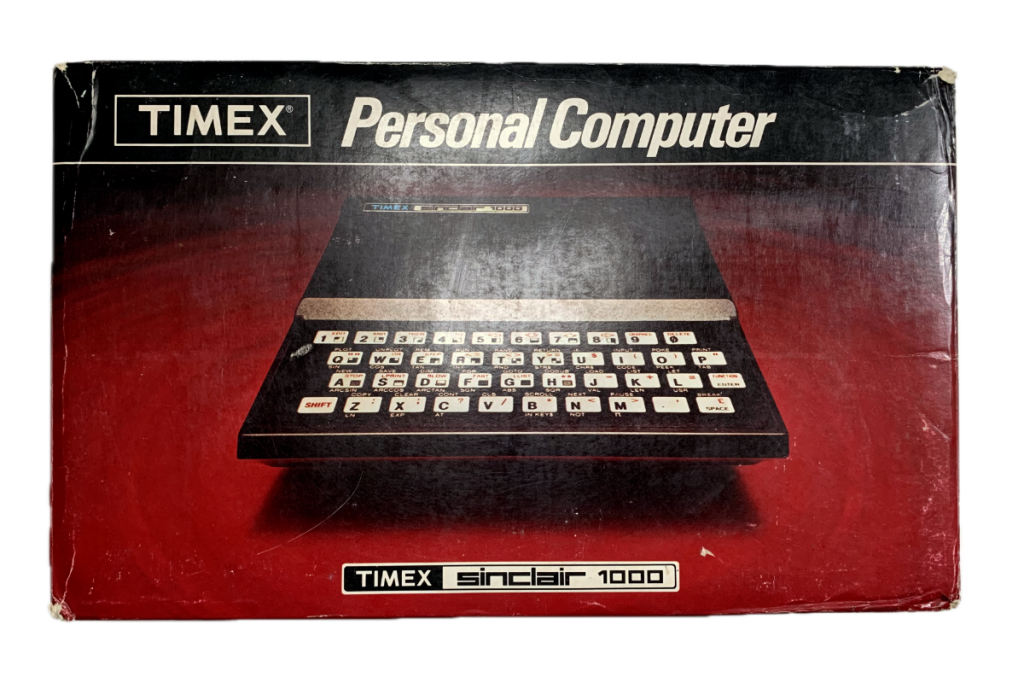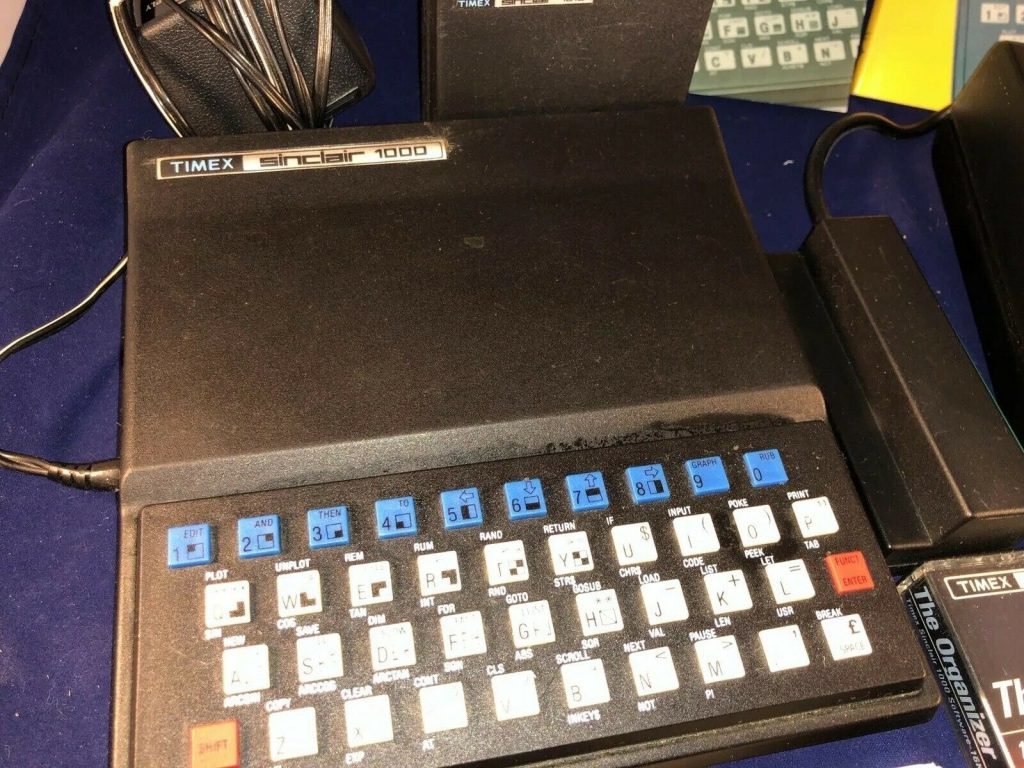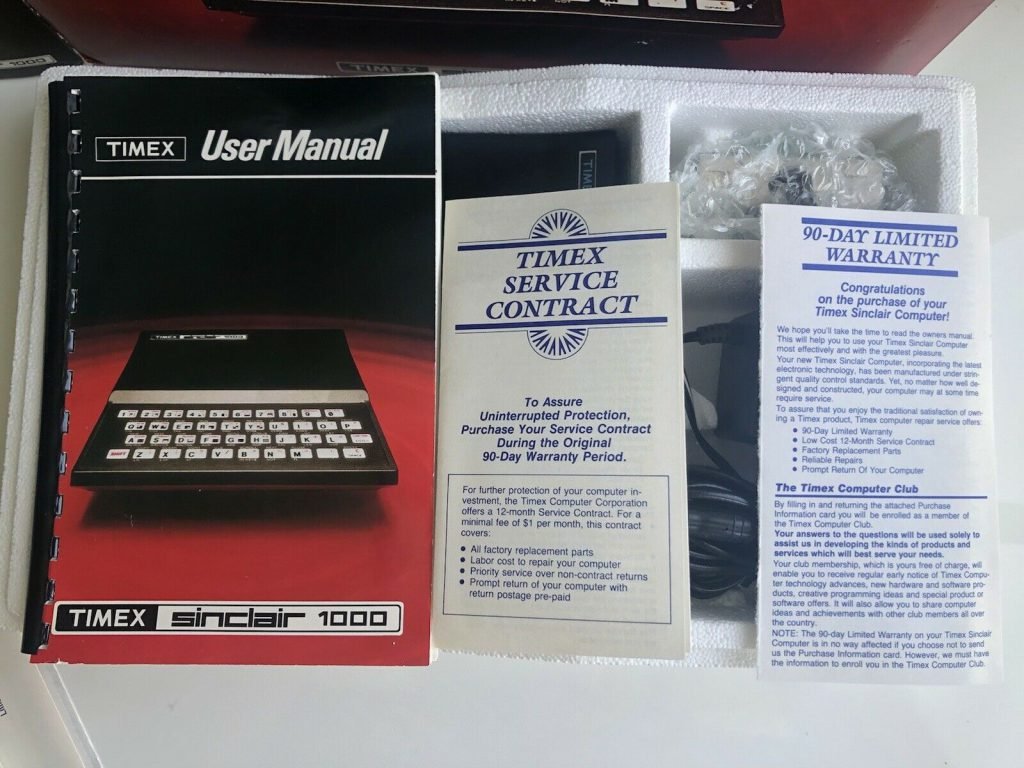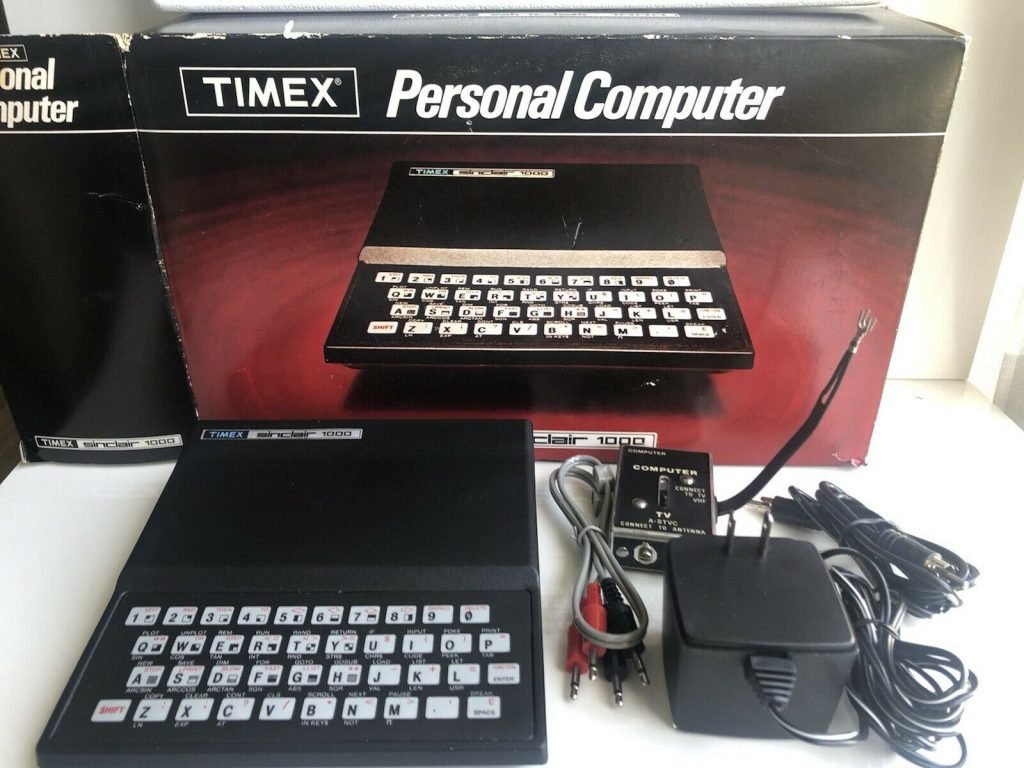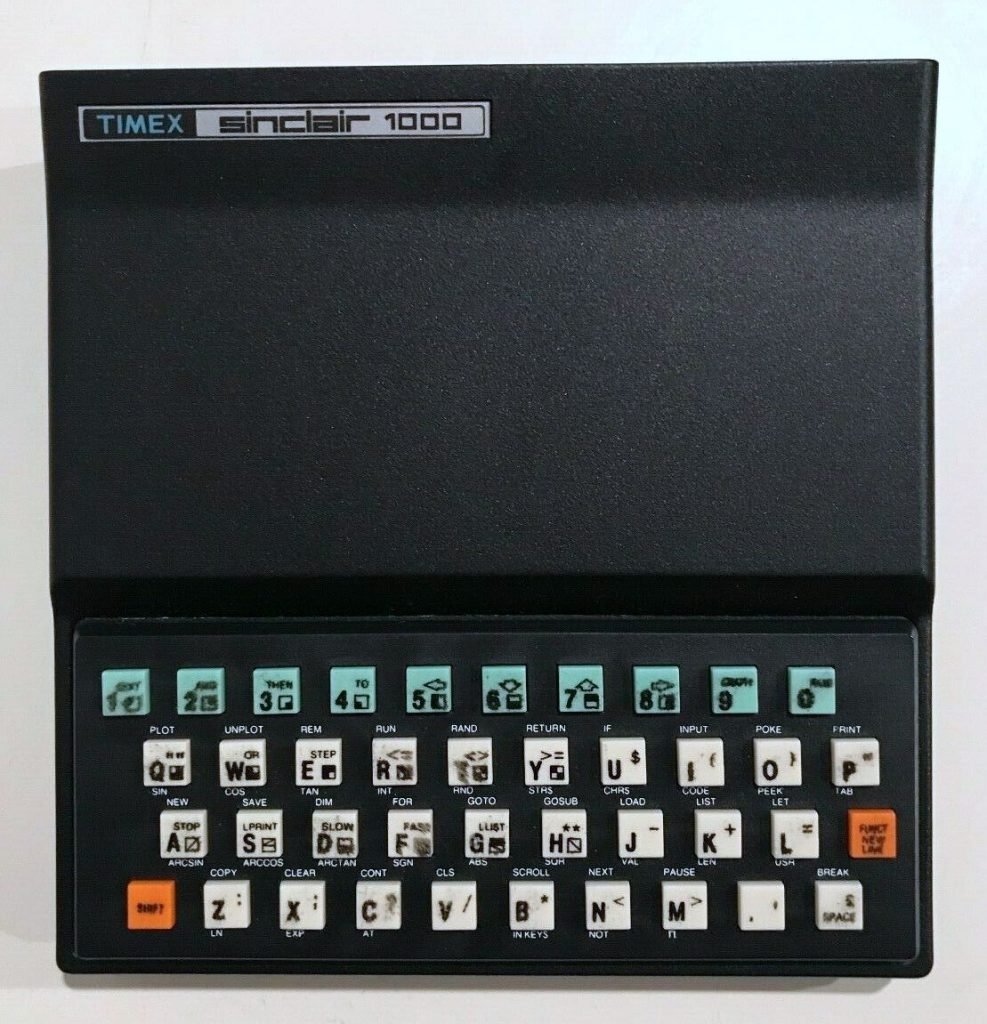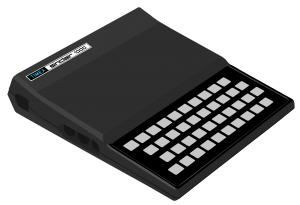
The Timex/Sinclair 1000 launched in July 1982 as the first fully assembled computer priced under $100. It was a Sinclair ZX81 built by Timex with twice the memory, sold at $99.95 through stores that had never sold a computer. By the end of 1982 Timex had sold about 600,000, and newsletters credited it with more than a quarter of the home computers sold in the United States. Its price cuts helped start a price war that, within two years, drove Timex out of the market.
The TS1000 was Timex Computer Corporation‘s entry into the American market. It was led by Danny Ross, Timex’s vice president and COO, who joined Timex in March 1982 (T-S Horizons).
Announcement and Launch
Timex announced the computer in New York on April 20, 1982, at a press luncheon at Tavern on the Green attended by Clive Sinclair (T-S Horizons). The press release promised a “fully-assembled” computer at $99.95 in July, sold through “more than 100,000 retail outlets,” with a 90-day guarantee and national advertising from August. Infoworld added a 16K RAM pack at $49.95, rights covering North and Central America and the Caribbean, and about 25 programs at launch. Syntax called it a virtual twin of the ZX81 and noted that there would be no more kits.
Ross later told a user group that the first units were sold on July 29. Timex’s advertising began in September with the slogan “The Power is Within Your Reach,” and the toll-free line it promoted was swamped: Infoworld reported 5,200 calls an hour, and the New York Times up to 50,000 a week. Production ran at one computer every ten seconds. The Smithsonian took a TS1000 for its permanent collection (Timex Sinclair User).
Differences from the ZX81
Timex’s main change was doubling the built-in RAM from 1K to 2K, in a single 2K static RAM chip, made by Toshiba, NEC or Motorola. It was reviewed in BYTE by Billy Garrett in January 1983. The extra memory was the difference between demonstration programs and useful ones.
Several things often described as Timex improvements came from Sinclair’s American ZX81 of 1981, which already had a channel 2/3 VHF modulator, better shielding and the key names DELETE and ENTER in place of RUBOUT and NEWLINE (Syntax, SYNC). The case is the same size as the ZX81’s. Every TS1000 was sold fully assembled and tested.
Timex built its first ZX81s in Dundee, Scotland, but Jesse Peeler‘s survey of boards found that most TS1000s were built in Portugal and some in France. Some Portuguese units used circuit boards made in Spain. All used the issue 3 board with the RAM soldered in.
Marketing
Ross had programmed in FORTRAN in the 1960s, and he aimed the TS1000 at first-time buyers, schools and hobbyists (interview). Timex sold it through department stores, discount chains such as K-Mart, jewelry stores and drug stores. Its own figure was more than 100,000 outlets, and the British press reported 171,000 (ZX Computing). The number actually carrying the computer was smaller: about 14,000 by SYNC’s count (SYNC).
Timex’s marketing staff included Margot Murphy, who also ran the Timex Computer Club. Its public relations agency was Ruder and Finn, which Ross recalled won a Silver Anvil Award for the campaign. Timex supported retailers with dealer training and point-of-purchase displays (Mart). Timex paid Sinclair a royalty on every unit sold (ZX Computing), reported elsewhere as 5 percent (Synchro-Sette).
Sales and Prices
- Sales: 550,000 in the first five months (Computers & Electronics, citing the Wall Street Journal); 600,000 between August and December 1982 (Popular Computing Weekly); a million produced by January 1983 (Infoworld).
- Market share: “28 percent of all home computers sold” within five months (T-S Horizons), or “more than 30 per cent” (Timex Sinclair User).
- Prices: a $15 rebate in early 1983, a list price of $69.95 that April (Syntax) and $49.95 from April 28, 1983. By that fall stores sold it for $30 or less (Computers & Electronics), and as low as $27.95, with banks and encyclopedia sellers giving it away as a premium (Computers & Electronics). Liquidation prices reached $24.95 by January 1984 (Synchro-Sette). After the exit TS1000s sold for $59.95 at a hamfest in spring 1984 (CATS), and T/S Connection had new ones in the box for $37.50 in March 1985 (CATS). That December a Rockville store offered a TS1000 with 16K, a TS2040 printer and six games for $100 (CATS). By 1987 one sold for $22 in a Rockville second-hand store (CATS), and non-working ones went for $15 at the Indianapolis fest (CATS).
Retailers were dropping the line by the summer of 1983, reporting many returns from customers frustrated by tape loading and RAM pack wobble (Boston group newsletter). George Grimm, Timex’s software manager, later said, “We sold 600,000 but a lot were returned.” Many owners traded their TS1000s in under Commodore’s $100 trade-in offer on the Commodore 64 (LISTing).
Reception
Electronic Fun with Computers & Games called it “a superior program training tool.” Interface Age reviewed it in February 1983, and Syntax tested it, finding crashes from the RAM pack and a manual “in minute type.” Wayne Green wrote of “a rising chorus of frustrated Timex users” in November 1983. When Timex left the market, an analyst at Future Computing called the TS1000 “a computer literacy device” that more sophisticated computers had overtaken.
The End
Timex announced on February 22, 1984 that it was leaving the home computer market. The New York Times reported that it had sold more than a million computers in all, with about 400 other companies making products for them. In 1983 Timex sold 1.2 million computers, mostly TS1000s, and lost $100 million on $400 million in revenue (T-S Horizons). Timex had already begun selling replacement parts and schematics from Little Rock, Arkansas.
Common Problems and Fixes
- RAM pack wobble. A bump to the 16K pack crashed the machine. Owners used tape, Velcro, brackets and felt pads (Time Designs); Timex’s own staff wedged pencil erasers under the pack (George Grimm). Microcomputing printed a cure, and Timex Sinclair User showed how to mount the RAM inside the case.
- Heat. The voltage regulator’s heat sink is too small. Owners drilled vents, used a lower-voltage supply (Timex Sinclair User) or moved the 7805 regulator outside (LISTing).
- Repairs. The ULA fails most often, then the Z80, and the keyboard ribbons become brittle (Time Designs). Of 12 surplus TS1000s that Jesse Peeler examined, 11 had damaged keyboard connectors (LISTing). Loose jacks have a simple fix.
- Tape. Timex Sinclair User printed golden rules for SAVE and LOAD. Fast loaders such as Z-XLR8, Fastload and the Winky Board shortened loading times.
What Owners Added
Third-party companies and owners extended almost every part of the machine. A Sinc-Link checklist covers a larger power supply, a reset button, a hardwired keyboard, composite video, 8K of static RAM in the 8–16K block for high-resolution graphics, up to 192K of memory, Tom Bent’s replacement ROM and Oliger’s color board. Other projects include 64K inside the case, sound through a radio and a UHF modulator. Commercial add-ons included memory to 64K, full-size keyboards, sound boards built on the AY-3-8910, speech synthesizers, disk interfaces and Centronics and RS-232 printer interfaces.
Timex’s own add-ons were the TS1016 16K RAM pack, the TS2040 printer, made by Alphacom after the ZX Printer failed FCC rules, and the TS1510 cartridge player. The TS2050 modem never shipped under Timex.
The Community
In November 1982 Infoworld quoted Ross as saying “between 600 and 700 companies” had sprung up to make add-ons. User groups such as the Long Island Sinclair Timex (LIST) User Group kept tape libraries, and programmers wrote games, business programs, educational software, compilers, assemblers, Forth and Pascal.
SYNC (1981–1984) was the main magazine, with about 34,100 paid subscribers in October 1983 and nearly 40,000 at the end (Syntax). Timex Sinclair User, from ECC Publications, printed 100,000 copies of its first issue in 1983 and ran nearly 250 articles, reviews, programs and projects across seven issues. Newsletters and magazines such as T-S Horizons and Time Designs (1984–1989), started by Tim Woods and others, carried the community on after Timex left.
Further Reading
- Timex Sinclair 1000 User Manual, with Timex’s corrections sheet
- Press release, April 20, 1982
- TS1000 brochure and the Timex price list, May 1983
- Timex Sinclair 1000 Quick Reference Card
- Technical Comments Relating to the Sinclair ZX81 and the TS1000, Jesse Peeler
- Inside the T/S1000/ZX81, Timex Sinclair User, June 1983
- The Rise and Fall of the Timex Computer Corporation, Tim Woods, Time Designs, 1984
- Tips, Tricks and Techniques of the User Group Masters
Modern Upgrades
- Composite video output mods – Ben at ByteDelight covers how to modify your 1000/ZX81 for composite video output.
- ZX8-CCB composite video mod – this mod is quite good, adds the missing “back porch” and works well with LCD monitors. It’s what I have on my 1000.
- ZXpand – Adds 32K RAM, AY-3-8910, SD card, serial, joystick and high res graphics, all in one.
- ZX-Key – External keyboard, full-size key switches and caps.
Posts about the Timex/Sinclair 1000
- "Made In Spain" ZX81 and TS1000 PCBs
- “The Trident” Adventure Game for the Timex 1000
- 8-Bit Guy on the Timex/Sinclair
- A New Lunar Lander for the ZX81 / Timex Sinclair 1000
- Comparing FORTH Implementations: Tree-Forth vs. ZX Forth
- Designing a Video Interface with No Prior Experience
- DIY Keyboards for the ZX81 and TS 1000
- Exploring the Legacy of Timex Computer Corporation: Insights from Danny Ross
- Homegrown: North American software for the Timex/Sinclair 1000
- Jim Payne and Pheonix Enterprises
- K-2 Kradle Keyboard and Enclosure
- Keyboards and Keyboard Accessories for the ZX81 and TS1000
- MIDI on Timex/Sinclair Computers
- Minstrel 3 Review
- RAM Packs and Memory Expansion for the ZX81 and TS1000
- Robotics with Timex/Sinclair Computers
- Sinclair in Print, 1980–2026
- The First Drag Racing Data Recorder Was a Timex/Sinclair 1000
- Timex at K-Mart
- Timex/Sinclair Commercial
- Two Decades of Timex/Sinclair Wisdom
- Vintage Computer Festival MidWest 2026, Part 2
- Vintage Computer Festival MidWest 2026, Part 4
- Vintage Computing Festival MidWest 2026
- VOTEM: The $40 Computer Peripheral That Went to Space
References
- Goncharoff, Katya. “Computer-Curious Clog Hotline.” The New York Times, November 21, 1982, sec. N.Y. / Region.
- Shea, Tom. “Big Ad Campaign Spurs Sales of World’s Cheapest Computer.” Infoworld, November 1, 1982.
Photo Gallery