
Timex Computer Corporation
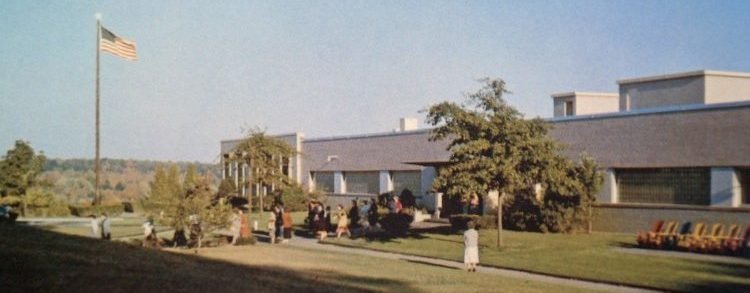
While the Timex Corporation is best known for its watches, it also produced a number of other products since its inception as a clock company in the mid-1800s. During World War II, the company produced fuse timers for defense products, continuing through the 1950s and the Korean war.
After the Korean war ended, Timex expanded its wristwatch operations. Traditionally the domain of jewelers, Timex opened new distribution channels in department stores, cigar stands, drug stores and other mass-market outlets. Demand for the company’s watches required increased production capacity and Timex built new plants in the United States, Europe and Asia.
Excess Production Capacity
Timex, as a result of its numerous plants across the world, had excess production capacity that opened a new market for the company as contract manufacturer. One of the company’s first clients was the Polaroid Corporation. Timex was the exclusive manufacturer for all Polaroid companies, worldwide, throughout the 1970s, eventually manufacturing more than 44 million cameras.
Timex also produced computer components for major manufacturers and the Nimslo three-dimensional 35mm camera.
Agreement with Sinclair
This excess capacity led Timex’s agreement with Sinclair to manufacture the ZX81 computer, at its Dundee, Scotland plant.
As part of the agreement, Timex had the option to market the ZX81 under its own name, once sales of the Sinclair ZX81 in the United States exceeded 500,000 units. The agreement extended to future Sinclair computers, resulting in the Timex Sinclair 2068.
The Timex Computer Corporation, a subsidiary of Timex Corporation, was formed to design and market Timex Sinclair products in the United States.
Timex/Sinclair 1000
Timex announced that it would manufacture and market the Timex Sinclair 1000, the first computer to break the $100 price barrier, on April 20, 1982. Sinclair had sold 500,000 ZX81 computers in the US prior to the announcement. Timex sold 600,000 of its computer in just the first three months, securing a staggering 25 percent of the total U.S. home computer market at the time.
Timex/Sinclair 2068
Launched in late 1983, the TS 2068 entered a crowded marketplace. Coupled with a less strenuous marketing effort than what accompanied the TS 1000 launch, the 2068 struggled to find a niche that extended well beyond the existing base of Timex/Sinclair owners.
Timex Exits Home Computer Market
Timex announced its exit from the home computer market in the U.S. on February 22, 1984. Mike Jacobi, vice-chairman of marketing and sales at Timex, said “We believe instability in the market will cause the value of inventories to decline, making it difficult to make a reasonable profit.”
Jacobi was alluding to video game crash of 1983, which affected the home computer market and led to Texas Instruments and Mattel, among others, to withdraw as well. Commodore’s price war with Texas Instruments affected all other manufacturers and had driven the price of the TS 1000 down from $99 to as low as $19.
Timex Portugal
Timex’s manufacturing facility in Portugal continued to refine and develop new products after Timex exited the home computer market in the United States. They produced the Timex Computer 2068 and 2048, as well as disk drive systems and other products.
Key Employees
The corporation started with six employees:
- Bob Behler, engineering
- Carlos Dragovich, production
- George Grimm, software manager
- Margot Murphy, marketing services manager
- Dan Ross, vice president and chief operating officer
- Billy Skyrme, director of product planning
The key decision makers were Danny Ross, Kirk Pond and Rex Naden.
Eventually, others joined Timex as they needed more expertise to launch the 2068. They included:
Executives
- Lem Tarshis, executive vice president at Timex
- Kirk Pond, executive vice-president
- Rex Naden, vice-president of research and design
- Ed Tyranski
Design
- John Houlihan, design manager
- Gary Grimes, design manager, computer products
Engineering
- Lou Galie, director of engineering
- Tom Belpasso, IC engineer, project engineering manager
- Al Biderman, product manager, hardware development
- Michael Branigin, manager, computer hardware engineering
- Daniel Chen, senior project engineer
Computer Systems Architecture
- Victor Schiff, manager, computer systems architecture
System Software
- Scott McCourt, manager of system software
- Dave Boyle, software engineer
- Lon Hildreth, software engineer
- Will Collum, software engineer
Test and Operations
- Bruce Honnold, manager of test and operations
Quality Control
Other employees
- Sam Barron, San Francisco Bay area representative
- Ken Diederich, Little Rock factory/repair center employee.
- Charles Durang, writer
- Jack Ewald, Eastern Region manager
- Ken Hollandsworth, educational consultant
- Sue Mahoney, technical support manager
- Russell Meade, Oregon area representative
- David Ornstein
- Paul Schirloff, editor of Ramblings
- Doug Smith, manager, product planning
- Martha Warner-Dubay
- Phil Wright, technical liaison to “Silicon Valley” sources