
ZX81 in an Ophthalmologist’s Office
Reprint of an article about a medical practice program written by a practicing ophthalmologist.

The Authoritative Website for Timex/Sinclair Computers
Reprint of an article about a medical practice program written by a practicing ophthalmologist.
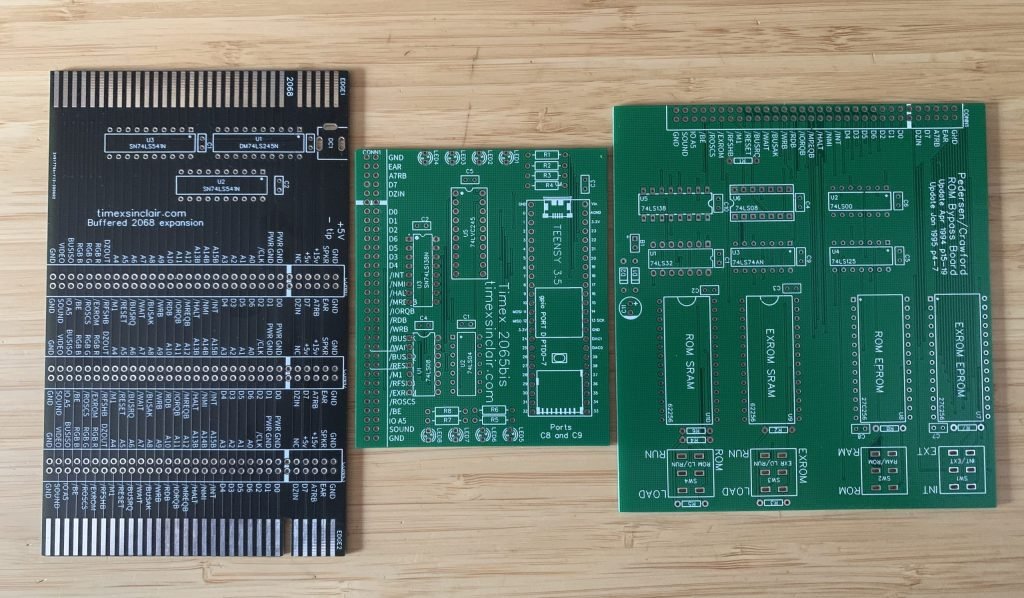
In testing my latest iteration of an RGB to SVIDEO/composite board, I managed to toast my 2068. Symptoms point to fried RAM chips, according to an article on DIY fixes to the 2068, so I’ve ordered replacements.
I’ve revised my RGB->SVIDEO design to be standalone. It uses a through-hole connector with all parts on the “back” of the PCB so it can plug directly into the 2068. No improvement to video quality, though I plan to build up a circuit that uses the Pound HD Link Cable for Sega Saturn to see if that’s any improvement.

K-2 Electronics Design offered a particularly robust keyboard upgrade to the ZX-81/TS-1000, one that far exceeded the options available from many other manufacturers at the time. The Kradle was more than just a keyboard upgrade: it included an expansion card with 64K RAM, a joystick port, cassette signal conditioning, extra automatically shifted keys and several other features.

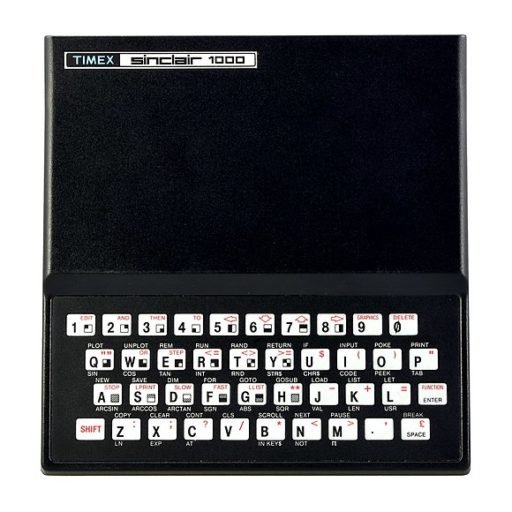
The TS1000 keyboard was, unsurprisingly, not the computer’s strongest feature. It required a very specific touch and was finicky. As a result, aftermarket solutions, from full replacement keyboards to “beepers”, were quite popular among serious hobbyists.
Keyboards and Keyboard Accessories for the ZX81 and TS1000Read More »

The 1K RAM on the ZX81 was not a lot to work with. A number of programs were written to fit in the restricted space but the real solution was more memory. In addition to the Sinclair and Timex/Sinclair RAM packs, many solutions were available, up to 64K RAM.
RAM Packs and Memory Expansion for the ZX81 and TS1000Read More »
In my previous post, I had revised my converter to use the LM1881 dedicated sync separator. Results, unfortunately, were poor. So, I went back to the data sheets for the AD724 RGB to NTSC/PAL Encoder and the LM1881 Video Sync Separator. Poring over them revealed I’d benefit from a few more capacitors.
John Coffey wrote this note to his customers, in part to explain why it was a few months late. by John Richard Coffey I became interested in computers in 1974 when I saw some of the first Apples demonstrated at a mall in my hometown of Columbus, Indiana. I learned a little BASIC then.
The following magazines on archive.org are fully indexed for all issues available:
Magazines in archive.org indexed as of Nov 27, 2019Read More »

Dave Ketchum, an actor, writer and director, was also a Timex Sinclair user. If you’ve seen Get Smart in re-runs or have seen the remake, you’ve seen him: he played Agent 13. In his review of Thomas Woods‘ ZX-Data Finder in issue 3 of Timex Sinclair User, Ketchum alluded to his background in mentioning that

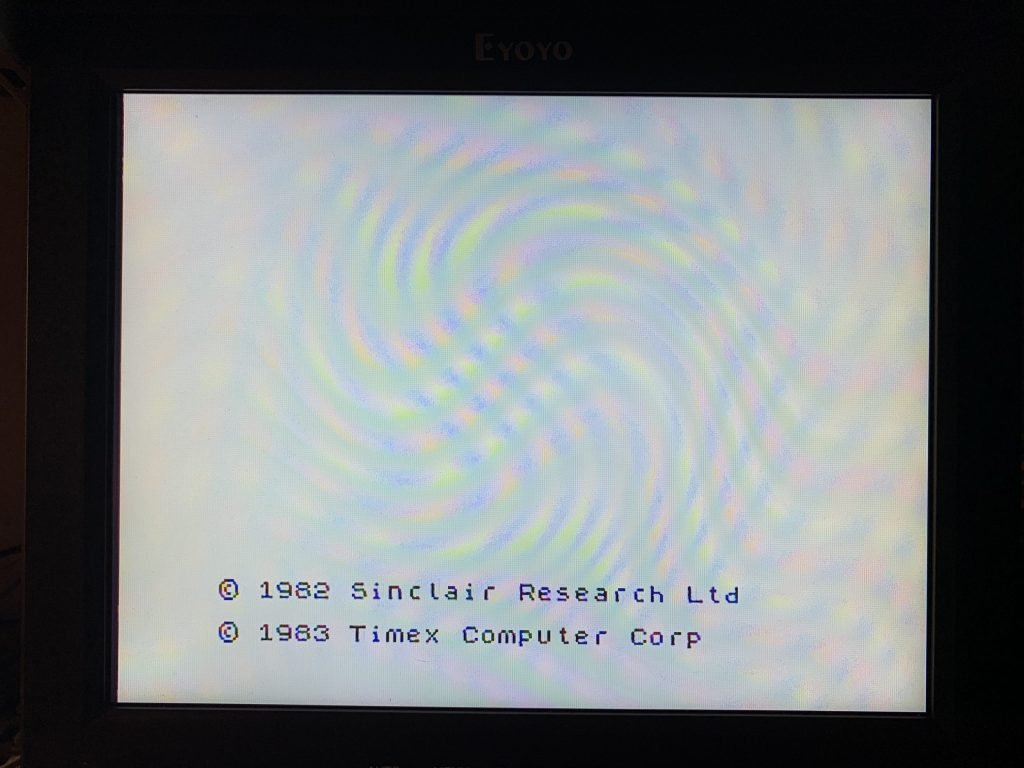
The Timex/Sinclair 2068 is full of design compromises and shortcomings and the quality of the video signal is one the most annoying. When it was new and connected to a TV, the RF modulator and overall poor bandwidth of TVs did a lot to mask the problem.