
Sir Clive’s Confessions
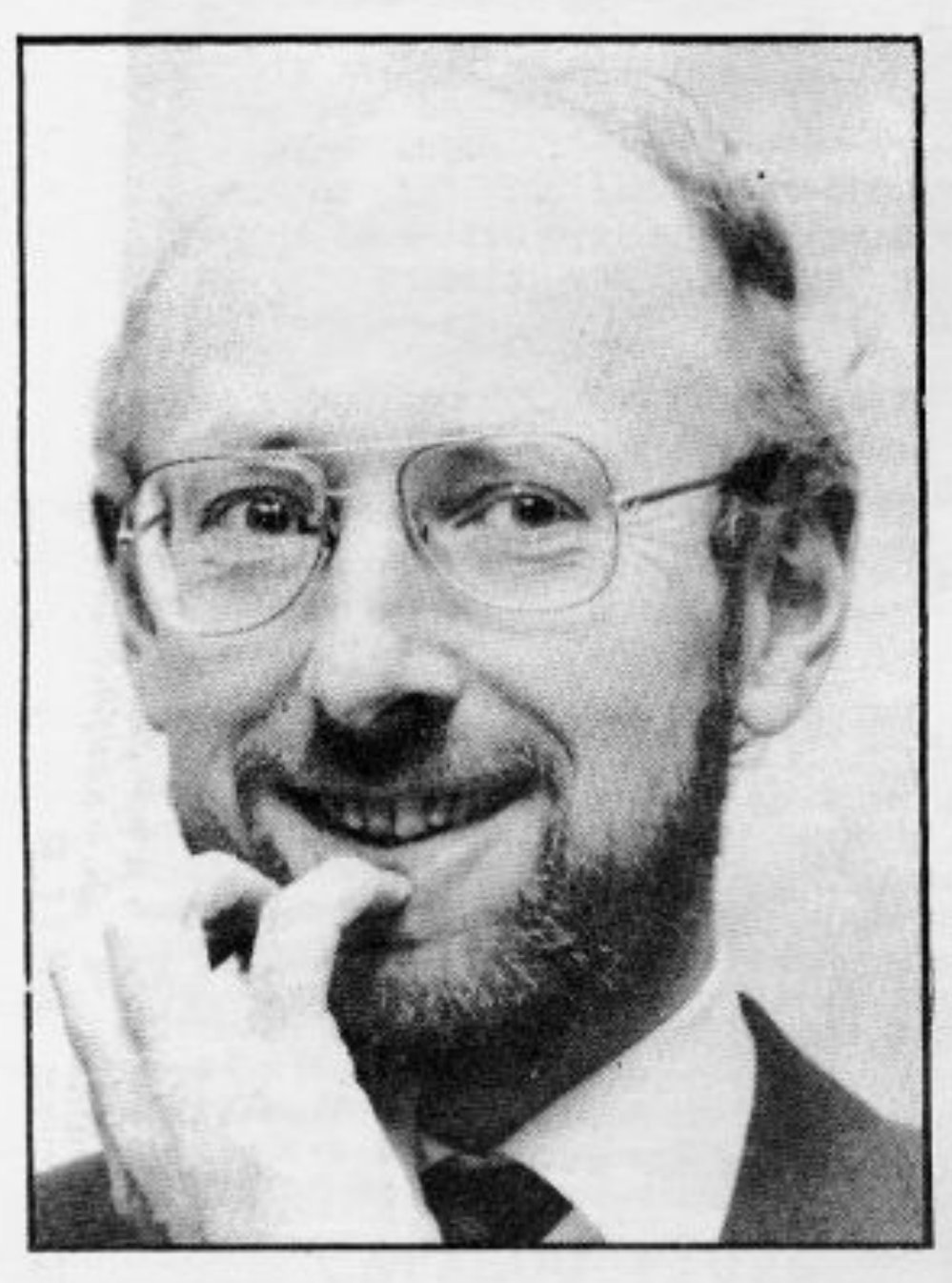
Entrepeneur extraordinaire, Sir Clive Sinclair, has ended several months of silence, following the sale of major interests in his company that pioneered low-cost home computers, to Amstrad Consumer Electronics PLC. Last week, Sir Clive came out of seclusion and spoke with the British press. The following comments were taken from two separate interviews relating to questions posed about Sinclair microcomputers.
Sir Clive on the Spectrum-
“The Spectrum was and still is an enormous success although it is showing it’s age a bit. I was rather surprised to see it turn out to be a games machine…we really knew very little about that side of the market.”
What about the QL?
“I think the QL was an interesting idea…a sophisticated machine, but in the end it didn’t work out very well, as we had originally anticipated. The market for a 68000-based micro wasn’t as big as research led us to believe. The QL had teething troubles early on. The truth was, that when the project came up, that later became the QL…I wanted to do the whole thing on the Z80 microprocessor, but most of the engineers and Nigel [Nigel Searle, former Sinclair Marketing Director] wanted to do it on the 68000. I couldn’t see the point of that because it seemed to me you were paying a lot of money for the chip and I couldn’t see what you were going to be able to do on it that you couldn’t already do on the Z80. Sure it was a bit faster in principle…but it wasn’t that in practice. Looking back there was no need to go for 68000 technology. We just haven’t found a way to use the 68000 that gives any extra benefit to the customer.”
Sir Clive on the Microdrives-
“The bad press the Microdrives received was unfounded, I’d defend them absoulutely. I think they were a marvelous approach to low cost mass storage. Their technology and application should be studied further.”
What about the Pandora?
“I want to go ahead with the Pandora project. It will not be compatible with either the Spectrum or QL, as we have lost all rights to their technology. I think it will be best in a way, as it opens the door for a new and customized operating system. Most of the portable computers available are compromises of one sort or another. To me, a portable computer must be totally portable and no trouble to use.”
Amstrad director, Alan Sugar?
“I hope to keep in touch with Alan Sugar, and I like him very much.”
Sir Clive’s future?
“I am most happy right where I am now..tinkering with new projects for the future. To be perfectly honest, I have never felt comfortable playing the business manager role.”
What’s In A Name?
Early in 1983, advertisements for RAMEX INTERNATIONAL appeared in the national Sinclair magazine SYNC. Ramex, of Utica, Michigan, sold external ZX81 keyboards, RAM packs, among other items. With the advent of the 2068, the company expanded further, under the direction of general manager, Scott Duncan. They obtained the exclusive marketing rights to TASWORD TWO word processor from Tasman Software in Great Britain. Later on, after Timex bailed out of the U.S. computer market, Ramex imported a Spectrum disk drive interface for the T/S 2068 and coupled it with quad drives as a package…it was called the “Millennia K”. An “overkill” with the quad drives later led to an Amdek 3″ disk system.
Then in February of 1986, Ramex announced that they were no longer supporting Timex computers or their disk drive system, but instead opted to carry the American version of the QL from Sinclair Research plus peripherals and software. They changed the name Ramex International to FOUNDATION SYSTEMS. About the same time, they moved from their original facilities to an address in Washington, Michigan. A new public relations manager wrote a review on the QL, which appeared in the February issue of Computer Shopper.
When A+ Computer Response of Keene, New Hampshire, took over distribution of the QL in the U.S., Foundation Systems became a fully authorized dealer.
In June and July of this year, several readers of TDM wrote, requesting assistance in contacting Foundation Systems, because QLs they had sent for were not being delivered. What TDM learned was that the distributor, A+ Computer Response was receiving similar complaints, and that Foundation’s phone number had been disconnected. A spokesperson for A+ informed TDM that Foundation was no longer an authorized QL dealer.
By surprise, in August, TDM was informed that once more, another company had surfaced using the same Washington, Michigan address…it is called MATRIX TECHNOLOGIES. The company took out a small ad in the September 1986 issue of Family Computing Magazine. The new product? IBM PC clones for $399.
NOVELSOFT Emerges As Premier TS Software House
If one were to imagine what the ideal Timex/Sinclair software company would be like, some attributes might include a full time office, open for customer’s questions and support, professional products with “complete” documentation at a fair price and prompt order processing. NOVELSOFT of Toronto, Canada, may come close to filling the bill.
The reviews are out, and the word is spreading fast about recent software releases from Novelsoft; TIMACHINE, quite possibly the best BASIC Compiler ever for Sinclair computers; ARTWORX Version 1.1, a sophisticated graphics package; and a brand new release called THE WORX!, which is a collection of useful mini-programs. All of these releases are on their way to achieving “hit” status in the T/S community…a small accomplishment that would blush next to the giant software houses, but a respectful one never the less.
According to Novelsoft, Senior Partner, David Ridge, the company was started to promote their programs in Great Britain. They have had some interested U.K. software publishers, but the current situation in England with Amstrad and the Spectrum, has put a halt to most major investments. The whole industry is waiting to see what will happen next.
Novelsoft has generously included a version of their popular programs on one side of the tape for the Timex/Sinclair 2068. The other side has a Spectrum version of the program.
Product/Dealer News
Sinclair telecomputing experts Ed Grey and Dave Clifford (G & C Computer Products), based in Southern California, have officially announced the release of SPECTERM-64 terminal software and the Z-SI/O card, an RS-232C interface for the T/S 2068. The Specterm-64 software will operate on a Spectrum-emulated T/S 2068. A stock 2068 version is planned for a later release. The terminal software includes a true 64 column display, uses XMODEM protocol for file transfer, will transfer all control characters including ESC, has a 35K+ buffer, and is fully compatible with the T/S 2050 modem and the Sinclair Microdrives. Specterm-64 comes with extensive documentation, and a special version configured to run the Z-SI/O card. The card was designed and manufactured by Dave Clifford, who also developed the Z-LINK Spectrum interface in 1985. Z-SI/O includes a standard RS-232 connector (DB 25 pin), and a full buss feed-through. It will drive a wide range of peripherals, including any 300 and 1200 baud modem (including Hayes compatibles) with the 2068. Note: Specterm-64 can be overlayed to run almost any RS-232 I/F currently available for the T/S 2068, including the circuit featured in the March/April 1986 issue of TDM. Specterm-64 also has built in 1200 baud compatible routines. Price for Specterm-64 is $30.00 plus $2.00 S&H in U.S. (Canada add $2-U.S.funds). The Z-SI/O card is $75.00 plus $3.50 S&H (Canada add $2). Additional information can be obtained by writing Ed Grey or Dave Clifford at: PO Box 2186, Inglewood, CA 90305, (213) 759-7406 or 516-6648.
Another good value for your T/S modem-ing dollar, is the LOADER V software package by Kurt Casby (25 Battle Creek Court, St. Paul, MN 55119). It is an enhancement for the 2068, 2050 modem and MTERM (Smart II) terminal software. Loader V is the final suite in the “Loader” series previously offered by Mr. Casby. Loader V features: An additional 20 number dialing directory, an auto-repeating dialer, capability to Load Mterm buffer with any standard “Bytes” file, Loads text files created with either TASWORD II or MSCRIPT into Mterm’s buffer, an XMODEM protocol, among several other user-friendly features. The program on cassette with complete documentation is priced at $9.95.
Robert C. Fischer, producer of PRO/FILE EXTENSIONS, T/S GRADER, WORD PUZZLER, and WORD GAMES, has changed his address and can now be found at Rt 2, Arizona St., Emerson, GA 30137.
QL SCREEN DUMP is a utility program that allows the user to dump items produced on the screen in SuperBASIC, to any Epson-compatible printer. QL Screen Dump is written in fast, compact machine code and reportedly takes up less than 3/4K RAM. The program is available for $24.95 from E-Z KEY, Suite 75, 711 Southern Artery, Quincy, MA 02169.
The English Micro Connection of Newport, Rhode Island, closed it doors for good on August 5th, due to some “serious health problems”. EMC owner and operator, Bob Dyl was an early supporter of TIME DESIGNS, and gave TDM several news items of Sinclair computing in Great Britain, obtained from several trips that Bob made to England. The editorial staff of TDM wish Bob a speedy recovery and best wishes for the future.
Knighted Computers, 707 Highland St., Fulton, NY 13069, (315) 593-8219 has obtained some stock and items as a result of the closure of EMC. For information and prices on some interesting QL goodies, write to either Ray or Joe at Knighted.
Stan Lemke, a regular columnist for TDM, and owner of Lemke Software Development (2144 White Oak, Wichita, KS 67207), has done it again. His new program, COLOSSUS, looks like a winner. The program is a graphics banner designer package that allows the user to create a banner 32 screens long, with a variety of font styles/sizes, and add low-resolution graphics on, over and around the banner text. There are also extensive editing features. Printing is to either 2040 or a full-size printer, with modifications by the user for specific printer/interface combinations. A bonus feature of Colossus is a “movie animation” function, that flips a total of 32 screens at the rate of four screens per second for an interesting effect. The program is available on cassette, with full documentation, and a sample animation file, for $19.95 (postage included).
HIGH RESOLUTION programming for ZX81-based micros, is the trend, up at Fred Nachbaur‘s workshop (address: C-12 Mtn. Stn. Group Box, Nelson, B.C., V1L 5P1 Canada). We’re not sure exactly how he does it, but we do know it takes a lot of memory. Fred’s latest offering is a high-res maze adventure game for the Timex 1500 with either a 16K RAM pack or 8K Hunter Board (purchasers must specify which version). A later version for the ZX81 and T/S 1000 will be released. DUNGEON OF YMIR, is 100% machine code, with monsters and multi-levels. Price is $24.95. Other hi-res programs are available.
Users Group Update
T/S User Group Correspondents: Send us your group’s address and we will list it in an upcoming issue. We will also print announcements, special events and User Group news (if it’s brief).
Anyone interested in forming a T/S User Club in the Leesburg area of (Central) Florida, should contact Warren Fricke, [address omitted], Leesburg, FL or phone [phone number omitted].
Timex-Sinclair User Club, c/o Mr. Richard K. Norek, [address omitted], Cheektowaga, NY.
Timex-Sinclair User Group, [address omitted], Ottawa, Ontario, Canada.
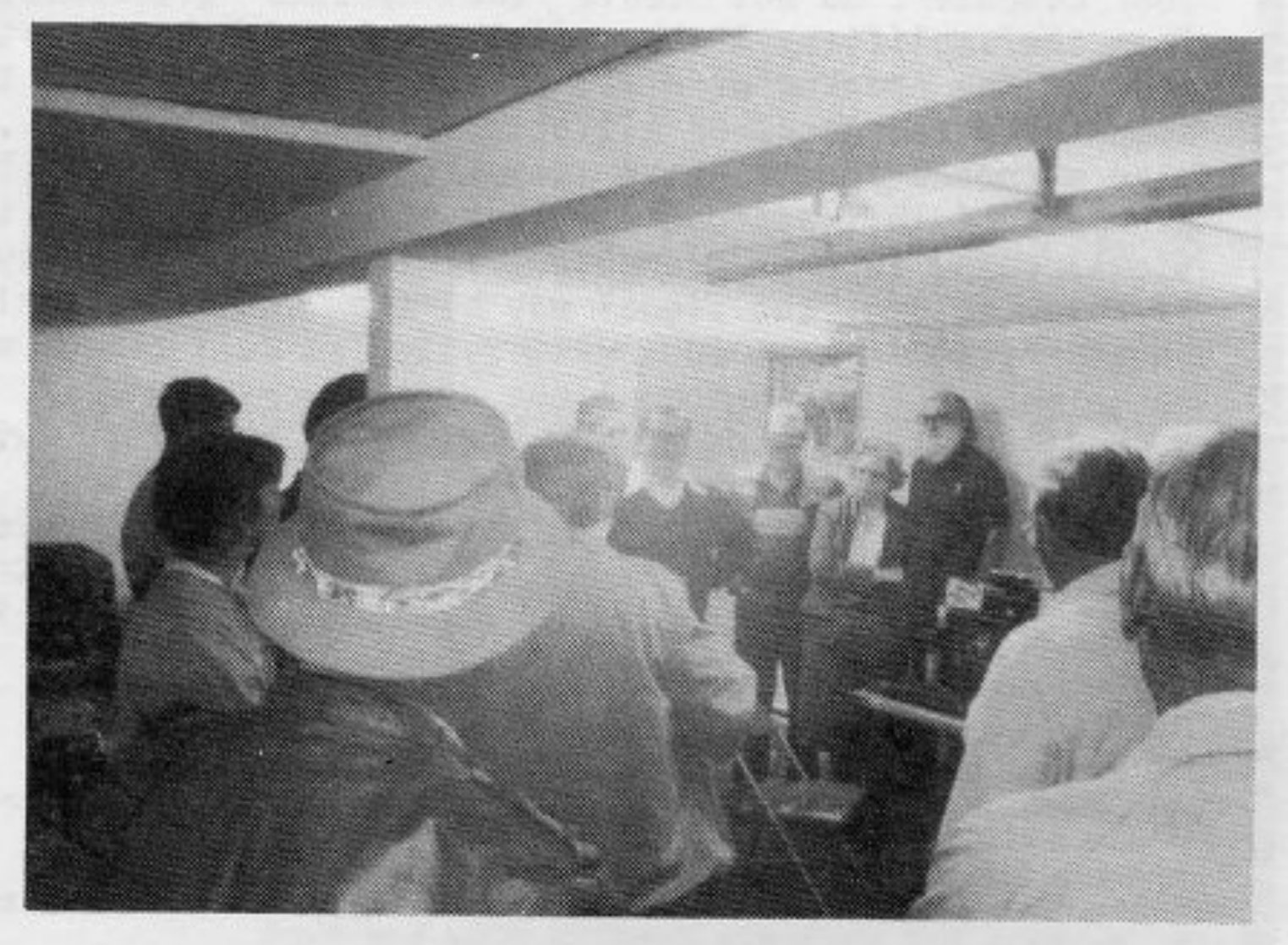
Over 45 guests attended the Grand Opening and Open House at the new facilities of Time Designs Magazine on August 30. Attendees included some members of CATS and PATS Users groups of Oregon, as well as a number of subscribers from the Northwest. Highlights included a QL demonstration by TDM writer, Mike de Sosa; preview of LIGHT SHOW 2000 (a program featured in this issue) by the author Michael Carver; Sinclair merchandise was displayed and sold by RMG Enterprises; and there were door prizes and refreshments. The day was enjoyed by all those who came. Tim Woods, Editor of TDM, announced that the Open House would be an annual event.