
The first of Tony Willing’s numbered Timex Sinclair Public Domain Library tapes, holding programs numbered from 20001. Its 49 programs range from games and Christmas cards to graphics demos, character-set and tape utilities, a machine code monitor, a renumber, two word processors, fig-FORTH, financial and statistical tools, and engineering programs for hydrology and linear optimisation.
The download has a TAP and a text listing of each program, under its library name, and a directory file that lists them with credits and dates. The list below follows that directory.
Programs on the Tape
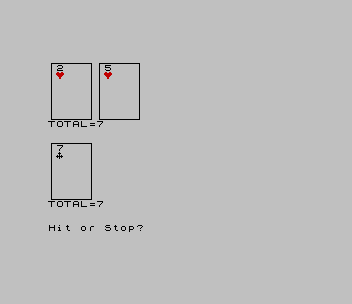
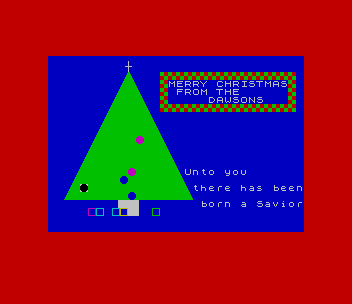
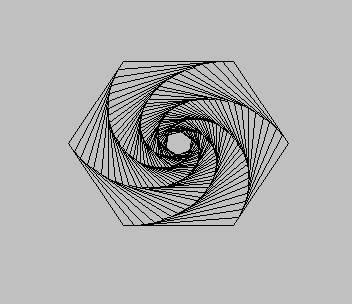
21: a Blackjack game with PLOT/DRAW card graphics and UDG suit symbols (also #56278 21)AutoAnswer: polls a port to detect an incoming telephone call and waits for a steady off-hook signal before running your own answering code (Randy Kuhn) (also #56279 Auto Answer)BigStuff: machine code that enlarges a screen into an eight-strip poster printed in one run (Jack Keene) (also #56280 BigStuff)BoldSub: rewrites the character set in RAM as bold characters, switched on and off with a POKE (Frank Bouldin and Ben Jackson) (also #56281 “BOLD” Character Subroutine)Bounce: a dot bounces round the screen, beeping at each wall, for the number of bounces you enter (also #56282 Bounce)Breakout: a Breakout-style game with coloured brick rows and a high score (also #56283 Breakout)Calendar: prints a calendar for any month from 1752 on, using Zeller’s congruence for the starting weekday (also #56284 Calendar)CassDir: catalogues a tape by reading its headers and logs type, name, length and address, ready to print or save (Michael Carver) (also #56285 Cassette Directory)Catalog: a machine-code tape cataloguer that reads headers as the tape plays and estimates where each file sits (also #56286 Catalog)Characters: redraws a word of up to ten letters as a large outline, using POINT and DRAW (Jasper Visser) (also #56287 Characters)Checkbook: reconciles a checkbook against outstanding checks and deposits and prints a statement (also #56288 Checkbook)Clip Art: a menu of ten PLOT/DRAW/CIRCLE pictures (flowers, a bee, a valentine and others) that can be layered on one screen (also #56289 Clip Art)Clock: a digital clock with large digits read from the ROM font and quarter-hour chimes (also #56290 Clock)DblThickChar: machine code that makes a double-thickness copy of the character set and saves the 768 bytes to tape (Ben Stagnell) (also #56291 Double Thick Characters)ExpSmooth: time-series forecasting by exponential smoothing; tries eleven smoothing constants and picks the best (also #56292 Time Series Analysis: Exponential Smoothing)Factorise: factorises numbers up to about four billion, with its own routine for printing large numbers (W. E. Thomson) (also #56293 Factorise)FadeOut: machine code that fades the whole screen to black (M. Waters) (also #56294 FadeOut)GraphicDemo: a shrinking geometric pattern drawn with four DRAW commands in two colours (John Copps) (also #56295 GraphicDemo)Header: reads tape headers and shows file type, name, length and start address (also #56296 Header)Hydrology: a menu of hydrology calculations: watershed slopes, drainage maps, unit hydrographs and lognormal fitting (also #56297 Hydrology)Hydrology2: three more hydrology modules: rainfall distribution, unit-hydrograph convolution and reservoir routing (also #56298 Hydrology 2)ImpossibleTriangle: draws the “impossible triangle” step by step with sound effects (Frank Bouldin) (also #56299 Impossible Triangle)Italics: a 42-byte machine code routine copies the ROM character set to 30208 and slants it into italics by shifting the top rows of each character to the right, then saves the 768-byte set to tape; the REMs credit Ben Stagnell and ZX Computing MonthlyKeyScan: a 25-byte machine code routine above RAMTOP that reads two keys at once, called with USR (also #56301 KeyScan)LinOptSi: linear optimisation by the Simplex method, printing the tableau at each step (also #56302 Linear Optimization By Simplex Method)MachineCodeMonitor: a monitor to examine, edit, enter, save and run machine code, in hex or decimal (also #56303 Machine Code Monitor)Memscan: a 34-byte machine code routine that reports what is in the memory map (Russell English) (also #56304 Memscan)Modem: dials a telephone number by pulsing the line through the expansion port, waits for carrier and starts a machine-code terminal (also #56305 Modem)MovingAverages: moving averages of a time series, with centred averages for even periods and repeated smoothing (also #56306 Moving Averages)NPolygons: joins every pair of vertices of a regular polygon of 3 to 30 sides (Frank Bouldin) (also #56307 NPolygons)NetPresVal: net present value and internal rate of return for multi-period investments (also #56308 Net Present Value)OverDemo: draws radial spokes with OVER on or off, so the lines either build up or cancel out (also #56309 OverDemo)OverDemo2: random lines drawn with OVER 1, each with a beep of varying pitch (also #56310 OverDemo2)PSG Register: reads and writes all the sound chip registers, showing each in binary and decimal (also #56311 PSG Register)Renumber: a machine code renumber held in 48 hex DATA strings that also fixes GO TO, GO SUB and RESTORE references (Charles Stelding) (also #56313 Renumber)Risk: the probability that a once-in-N-years event happens within a chosen period (also #56314 Risk)ScreenLayout: fills the display file and the attributes with a byte you enter, to show how screen memory is laid out (also #56315 Screen Layout Examination)Setype: installs 80 bytes of machine code that switches between regular, bold, modern and italic type from BASIC (Ron Ruegg) (also #55070 Setype)ShootingTiles: reads a text banner pixel by pixel and “shoots” each lit pixel down the screen with sound (Eddie Duncan-Dunlop) (also #56317 Shooting Tiles)Spiral: a hexagonal spiral drawn by rotation and scaling, converted from an Apple II program in Creative Computing (Joe Jenkins) (also #56318 Spiral)SquareWaveGraph: graphs a sine wave clipped into a square wave, with a labelled axis and live readouts (also #56319 Square Wave Graph)Tank: enter an elevation angle and fire a shell at a target (also #56320 Tank)Tape2Tape: a 20-byte machine code routine passes the tape signal from EAR to MIC to copy between two recorders (Larry Kenny) (also #56321 Tape to Tape Backup)TinyTurtle: turtle graphics driven by angle, step length and an optional increment (Tim Hartnell) (also #56322 Tiny Turtle)Triangle2Square: morphs a triangle into a square over 20 frames, using machine code to swap screen buffers (John Bell) (also #56323 Triangle To Square)Typewriter: a BASIC word processor with word wrap, tab stops, insert and delete, and tape save and load (Jack Dohany) (also #56324 Typewriter)Typewriter64: the 64-column version of Typewriter (Jack Dohany) (also #56325 Typewriter 64)Xmascard: a Christmas tree card with UDG baubles in changing colours and three carols (Chuck Dawson) (also #56326 Xmas Card)figForth: fig-FORTH for the TS2068, with support for bank switching, the Timex printer and extended memory, released to the public domain (Robert Burton) (also #56327 figForth v1.0)
Content
Image Gallery
Note: Type-in program listings on this website use ZMAKEBAS notation for graphics characters.