
Authors
Publication
Pub Details
Date
Pages
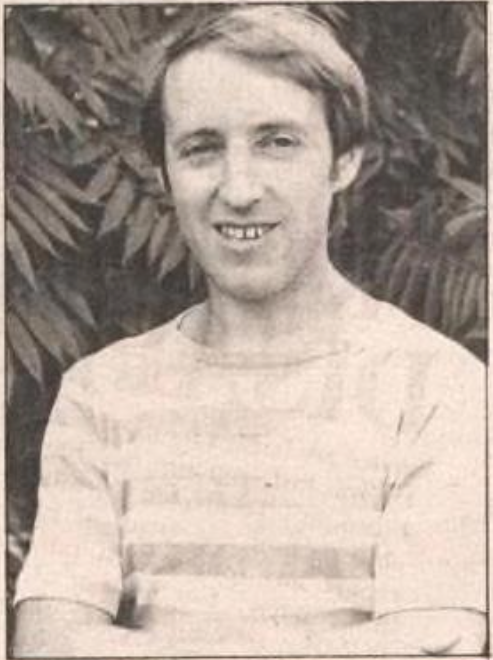
Despite an enviable reputation as an authority on Z80 machine-code, lan Logan still regards himself as an amateur enthusiast.
A graduate in medicine from Sheffield he qualified as a GP. But, his first attempt to get involved with computers was, a failure – he was turned down for a job as a doctor for ICL. “They gave me a nice lunch, but I didn’t get the job.”
After that, he spent nine years working as a GP – still with a faint hope of somehow, someday, becoming involved in computers.
In 1980, he joined the Lincolnshire Microprocessor Society. Through the group he met people who had Pets and Tandys. “I borrowed a Pet for a fortnight – and it sat on the table downstairs. I didn’t really know what to do with it.”
Then he bought a ZX80. “Bob Maunder of Linsac put an advertisement in one of the magazines, saying he wanted ZX80 programs,” says lan. *I phoned him up and discovered | knew more about the machine than he did.”
The two decided to produce a book for the machine – which became lan’s first book. A small spiral-bound handbook called The ZX80 Companion. lan wrote about one third of it the rest was written by Bob and another writer, Terry Trotter. It came out in September 1980.
All of lan’s knowledge of the ZX80 is self-taught. Back in 1980 there were no introductory tutorial books on machine code programming, such as there are now.
“At that time, I always used to think that somebody, somewhere, knew all there was to know about machine code programming. Now I have found out there never were any – there still are no experts.”
Bob Maunder was unable to publish lan’s next book, on ZX80 machine code, and suggested he try to find another publisher.
“There I was, a week after the ZX81 was launched, going round this micro show trying to get someone to publish a manuscript written for the ZX80.
“After a couple of people turned me down, I answered an advertisement from Melbourne House.”
“I got a phone call from Australia when I was over at the village hall mowing the lawn and my wife came running across to tell me. The call was from Fred Milgrom and that is how I started writing for Melbourne House.”
Fred Milgrom asked lan to convert his book for the ZX81: “Melbourne House apparently made a lot of money out of some sensational book published in Australia about female sex hormones. But Fred has a great interest in computers – and in particular he loves adventure games. “And he has some very good programmers out there with him now — like Philip Mitcheil who wrote The Hobbit.”
lan’s first book for Melbourne House was published in September 1981 – almost exactly a year after his first. Next came a chance meeting with Frank O’Hara – a government statistician. “Frank thinks and lives numbers,” says lan. “And he understands all the mathematics which I don’t.” Together they wrote Understanding Your ZX81 Rom. “1 started ZX81 disassembly from the front. and he started from the back. We met in the middle.”
Then the Spectrum came out – lan and Frank have recently written The Complete Spectrum Rom Disassembly for it. “The book is doing very well – because nobody else has attempted anything like it.”
For the last couple of months lan has been preparing yet another book: The Spectrum Microdrive Book. This book is a departure for lan — for the first time he is writing about his own work. From Christmas until Easter, lan worked two days a week for Sinclair, writing software for the Interface 1, which is necessary to connect the Microdrive to the Spectrum.
Ian’s book on the Microdrive and Interface 1 will be published in either late September or early October.
Since working on, and writing a book about, the Microdrive, lan has become something of an authority on the device. “People don’t seem to be as excited about the networking possibilities as i thought they would be – there is no reason why you cannot join up Spectrum Net to other computers. Networking is great fun.
“The other thing people don’t seem to have realised is that you can pass any- thing on the RS232 and store it on Micro- drive – if you are prepared to use the Spectrum as a controller. You could easily save software from a BBC onto Microdrive.
“It remains to be seen if anyone will build Microdrive controllers for other machines to use them direct. Although not difficult technically, it might be difficult to manufacture it at a low enough price – the Microdrive has a big ULA in it, doing a lot of work.”
One of the most interesting things lan has discovered is the existence of a set of software ‘hooks’ to enable users to access routines in the Interface Rom. This means that anyone can now add new commands to the Spectrum. “You can add what you like — add new languages if you want.” These can only be written in Ram but, if stored on Microdrive, they could be loaded in each time before using the machine.
When Ian was working at Sinclair, he met Scott McCourt. Scott was in charge of writing the system software for the Timex 2000 machine, the US Spectrum equivalent. He asked Ian for help – to go over to the US and write software for them.
“They wanted to add new commands to the Spectrum,” says Ian. “The machine was a 1981 design and requirements for a 1983 computer have evolved since then. They were going to have to redo the Spectrum printed-circuit board for the TS2000 to satisfy US FCC regulations and to make it compatible with the NTSC TV standard. So, while they were about it, they decided to produce an enhanced version, with extra commands.”
“I’m not sure if Timex made the right decision – maybe they should have just put out the Spectrum, more or less as it is and got it out over there earlier.”
During his two weeks stay with Timex, Ian showed them how to add new commands and routines. He extended the syntax checking and corrected some of the small bugs in the Spectrum’s own ROM. “I wouldn’t want to make too much of the Spectrum’s faults. It is a very successful machine,” he says. “After all, it is not often you need to use the number -int 65536.”
After the Microdrive book comes probably a TS2000 version of lan’s best-selling Complete Spectrum Rom Disassembly, again with Frank O’Hara. “I don’t know what I will do next – at the moment I’m sort of drifting from one thing to another. I had a Vic20 all last winter – the plan was to write a book for it – but I got so frustrated at the way the machine software was organised.
“Perhaps I ought to sit down and write some programs – but I don’t like writing games very much. I am going to have to learn a bit about 16-bit machine language. That’s going to be all the rage next year.
“What I have found is that I like problem solving. I enjoyed my work with Sinclair and Timex – and I’d like to do more. I’d like to continue to be involved with the computer industry and I don’t feel as though I am at present. People like me don’t get employed by a company if they can do it themselves.”