
Welcome to TimexSinclair.com, your definitive resource for everything related to the Sinclair and Timex/Sinclair computers in the United States. From the groundbreaking Sinclair ZX81 that brought affordable computing to American homes in 1982, to the Timex/Sinclair 2068, we celebrate these remarkable machines that introduced a generation to the world of programming and digital innovation.
Timex/Sinclair
The American chapter—Timex brought Sinclair’s vision to U.S. homes.
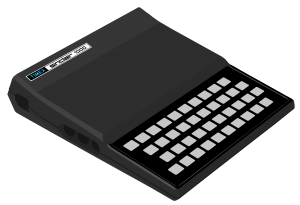
1982
Timex/Sinclair 1000
The U.S. version of the ZX81, available for under $100 at retail stores across America. This machine democratized computing in the United States.

1983
Timex/Sinclair 1500
Enhanced version of the Timex/Sinclair 1000 with 16K RAM built in, ZX Spectrum style case and keyboard.

1983
Timex/Sinclair 2068
Color graphics, sound capabilities, and a cartridge port made the 2068 the ultimate U.S. Sinclair experience with serious computing power.
Sinclair
The pioneering machines from Clive Sinclair that revolutionized home computing.

1980
Sinclair ZX80
The machine that started it all—revolutionary for its price point and brought computing to everyday people.

1982
Sinclair ZX Spectrum
The ZX Spectrum brought vibrant color graphics and sound to the home computer market, selling over 5 million units worldwide.

1981
Sinclair ZX81
The machine that brought computing to the masses. Sold over 1.5 million units worldwide—legendary affordability and hackability made it an icon.

1984
Sinclair QL
Sinclair’s ambitious 32-bit business computer. Multitasking OS, built-in Microdrives—ahead of its time with professional aspirations.

1987
Cambridge Z88
Sinclair’s ambitious 32-bit business computer. Multitasking OS, built-in Microdrives—ahead of its time with professional aspirations.
Join Us Online
We have a YouTube channel, active email list and more! We meet via Zoom on the first Monday and third Sunday of each month to chat about our favorite computers, projects and more. Each meeting is recorded and posted to YouTube. You can watch some of our most recent meetings below.
Recent Blog Posts
-
Using Timex’s Dual Screen Mode Support
READ MORE: Using Timex’s Dual Screen Mode SupportThe TS2068 has a second display file at 24576 (6000h). The hardware can show it, the EXROM has a routine to open it, but BASIC has no way to write to it. Timex wrote a machine-code module to fill that gap. Dual Screen Mode Support is ASC No. 004 in the Timex Application Development Library,…
-
Writing Channel Code for the TS 2068
READ MORE: Writing Channel Code for the TS 2068The TS-Pico, a Raspberry Pi Pico board that gives the 2068 an SD card, comes with its own ROM, and that ROM gives the 2068 two new kinds of channel: f: reads and writes files on the SD card, and d: reads folder listings. A BASIC program connects one to a stream number with OPEN…
-
Vintage Computer Festival MidWest 2026, Part 4
READ MORE: Vintage Computer Festival MidWest 2026, Part 4Last in a series on VCF Midwest 21. Part one, part two, part three. The first two pieces in this series were about hardware being designed now. This one is about hardware somebody already built, in some cases forty years ago, by people whose names we mostly do not have. Joe VandeZande brought three such…